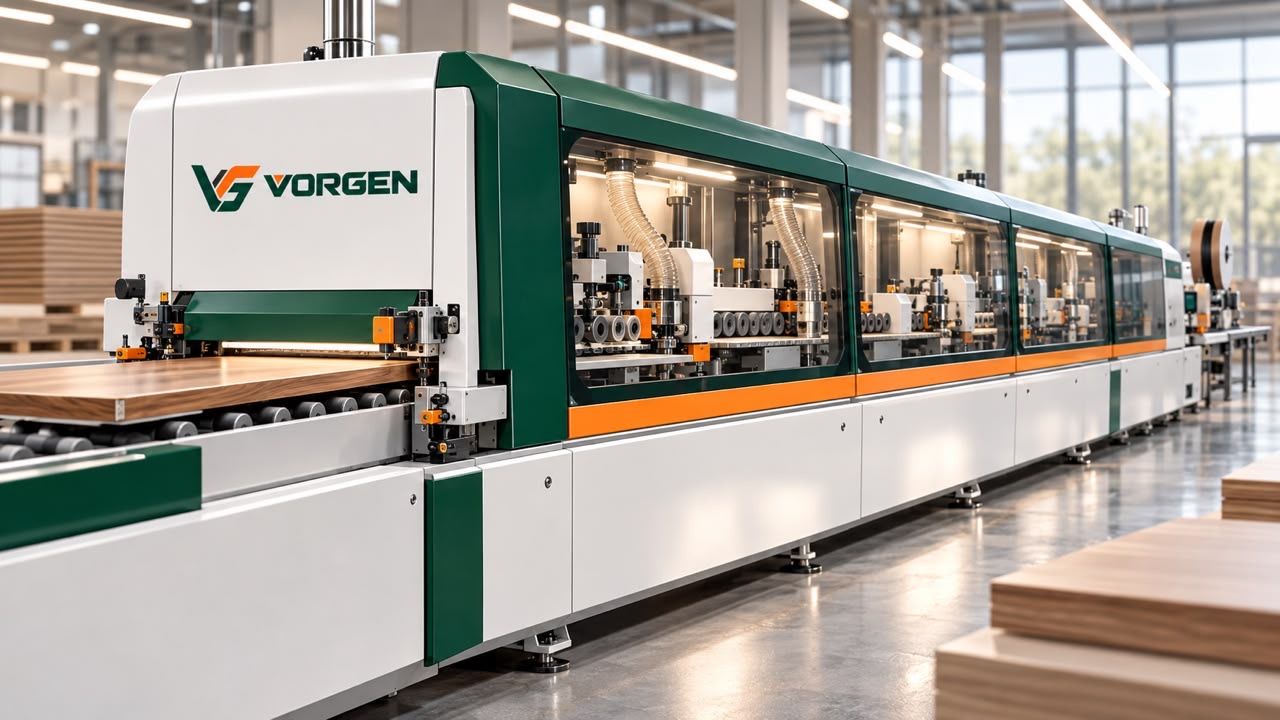
Edge Banding Techniques
VORGEN Education · 02 · Intermediate / Build

Edge Banding Techniques

The edge is what the customer touches first.

Tape, adhesive, temperature and pressure — and what a glue line should look like when all four are right. Covers both machine banding and the manual options a smaller workshop starts with.

Watch
Understand
Apply
Grow
Who it is for
  • Operators running an edge bander
  • Workshops still trimming edges by hand and considering a machine
  • Anyone whose finished cabinets are being rejected on edge quality
Before you start
  • Able to cut accurate, square panels
  • Basic understanding of substrate types
What you will be able to do
  • Match tape and adhesive to the substrate and the end use
  • Set temperature, feed and pressure for a clean, closed glue line
  • Trim, scrape and buff an edge to a consistent finish
  • Identify the cause of an open joint, a chipped edge or glue squeeze-out
  • Keep a glue pot and trimming knives in working condition
Where it fits

This course belongs to 02 · Intermediate / Build of the VORGEN journey.

See the stage →
Syllabus

10 modules.

Draft course outline for confirmation. Module order and depth to be finalised with the training team.

01

Why the edge decides perceived quality

  • What customers actually notice and touch on a finished cabinet
  • Where edges fail in service: moisture, heat, cleaning, impact
  • The cost of rework once a panel is already assembled

02

Tape and material

  • PVC, ABS, acrylic, melamine and veneer edging compared
  • Thickness choice and where a thicker tape earns its cost
  • Matching colour, gloss and texture to the board
  • Storage: why tape curls, and how that shows up on the machine
03

Adhesives

  • EVA versus PUR: bond strength, heat and moisture resistance
  • Working temperature, open time and glue quantity
  • When PUR is worth the extra handling and cleaning
  • Adhesion failures and what actually caused them
04

Machine anatomy

  • Pre-milling, glue application, pressure rollers
  • End trim, top and bottom trim, corner rounding
  • Scraping and buffing stations
  • Feed system, chain and pressure beam
05

Setting up a run

  • Bringing the glue pot to temperature and checking it
  • Feed speed against panel length and tape thickness
  • Setting tape height and trimming knives
  • Running a test panel and what to inspect on it
06

Reading the glue line

  • What a good glue line looks like in section
  • Gaps, starved joints and over-application
  • Panel edge condition before banding, and why it matters
  • Temperature and speed as a pair, not two separate settings
07

Trimming, scraping and buffing

  • Flush trim versus radius, and matching the profile to the tape
  • Removing glue residue without polishing a shadow into the board
  • Buffing to a consistent finish across a batch
  • Hand finishing where the machine cannot reach
08

Defects and their causes

  • Open joints at the ends of a panel
  • Chipping on the trim and what the knives are telling you
  • Wavy or stepped trimming
  • Burn marks, glue lines and contamination
09

Manual and portable options

  • Where hand banding is still the right answer
  • Iron-on and portable banders: what they do well and badly
  • Quality expectations at Entry stage
  • The point at which hand banding is costing more than a machine
10

Maintenance and consumables

  • Cleaning the glue pot and the cost of neglecting it
  • Anti-adhesive agent and where it should and should not go
  • Knife sharpness, replacement intervals and spares to keep
  • Daily shutdown routine