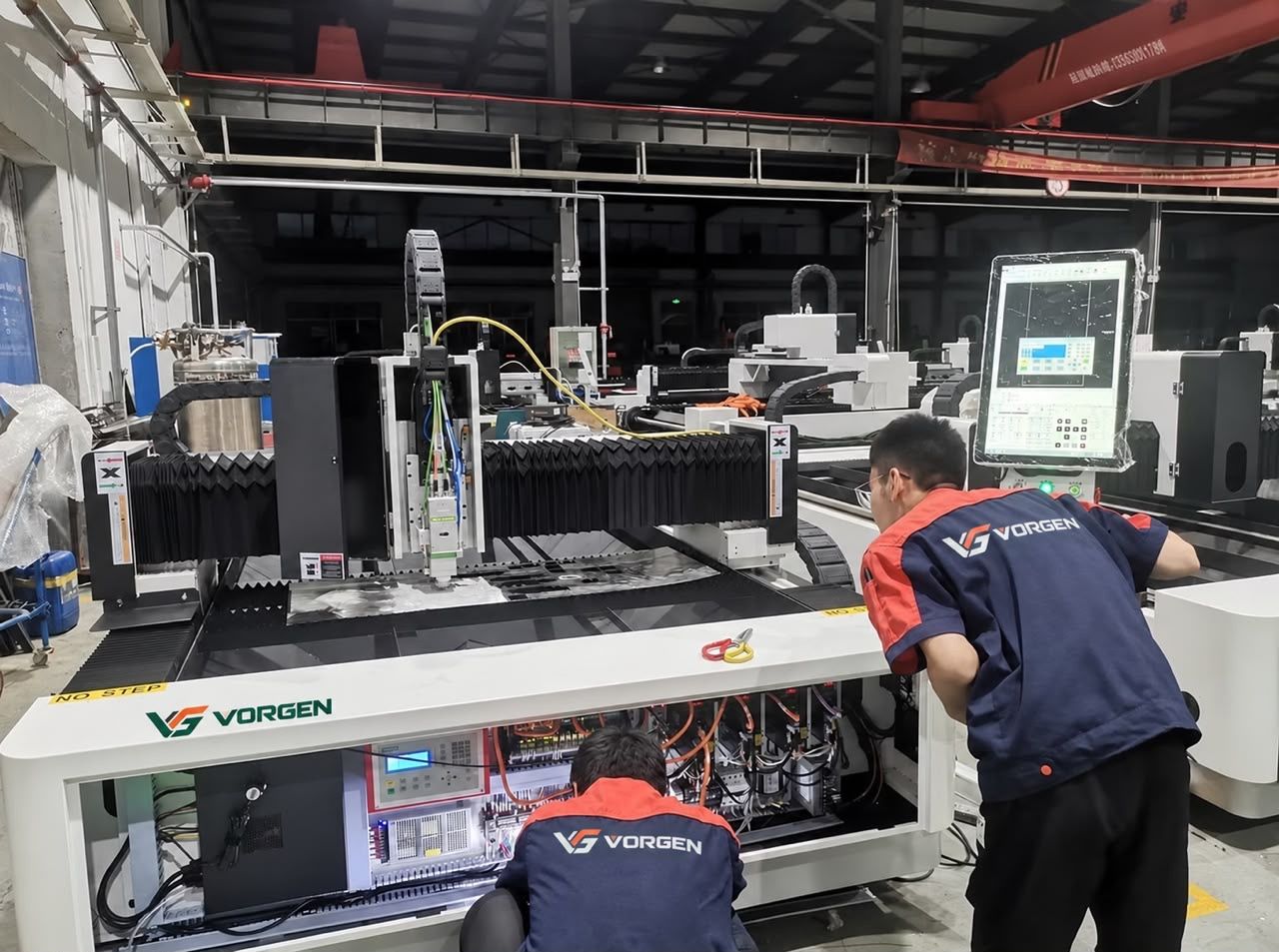
Machine Maintenance
VORGEN Education · 02 · Intermediate / Build

Machine Maintenance

Most downtime is a ten-minute fix that took three days to reach.

The daily, weekly and monthly routines that keep machines running — plus how to describe a fault properly so remote support can solve it on the first call instead of the third.

Watch
Understand
Apply
Grow
Who it is for
  • Operators responsible for their own machine
  • Owners planning maintenance instead of reacting to breakdowns
  • Anyone who has lost a production day to something avoidable
Before you start
  • Familiarity with the machines in your own workshop
  • Machines must be isolated before any maintenance task
What you will be able to do
  • Run a daily routine that takes minutes and prevents hours of downtime
  • Keep compressed air and dust extraction in the condition machines need
  • Recognise early symptoms of spindle, bearing and drive problems
  • Report a fault clearly enough to be diagnosed remotely
  • Decide which spare parts are worth holding
Where it fits

This course belongs to 02 · Intermediate / Build of the VORGEN journey.

See the stage →
Syllabus

10 modules.

Draft course outline for confirmation. Module order and depth to be finalised with the training team.

01

Maintenance as a production decision

  • The real cost of an unplanned stoppage mid-order
  • Planned versus reactive maintenance
  • Who owns the routine, and when it happens

02

Isolation and safe working

  • Isolating power and air before any work
  • Lock-off practice and why it exists
  • Working safely around stored energy and moving parts
03

The daily routine

  • Cleaning down: chips, dust and offcuts
  • Draining water traps and checking air pressure
  • Visual checks that take seconds and catch real problems
  • Start-up checks before the first job
04

Weekly and monthly tasks

  • Lubrication points and the correct grease or oil
  • Rails, racks, bearings and drive belts
  • Filters and cooling
  • Building a schedule that fits around production
05

Compressed air

  • Why moisture destroys pneumatic components
  • Traps, dryers and correct pipework falls
  • Pressure and flow: having enough, not just high enough
  • Air quality and its effect on hold-down
06

Dust extraction

  • Airflow requirements and why undersized systems fail quietly
  • Filter cleaning and replacement
  • Ducting mistakes: length, bends and open ports
  • The link between extraction and cut quality
07

Vacuum and hold-down systems

  • Pump care and service intervals
  • Seals, gaskets and leak-finding
  • Spoilboard condition and resurfacing
08

Spindle and tooling care

  • Warm-up routines and why they extend bearing life
  • Collet cleaning and correct tightening
  • Run-out: measuring it and what it costs you
  • Tool storage, handling and sharpening intervals
09

Fault-finding and reporting

  • A method for isolating a fault instead of guessing
  • What to record: what changed, when, and what it sounds like
  • Photographing and filming a fault usefully
  • Getting the most from a remote support call
10

Spare parts planning

  • Which parts justify holding stock
  • Consumables versus critical spares
  • Lead times and planning around them
  • Keeping a maintenance and parts log

Maintenance intervals in this course are taught as general practice. Always follow the schedule in your own machine's manual.